Languages, voice and subtitles
Five text languages — English, Japanese, Simplified Chinese, Traditional Chinese and Korean — with full voice acting in Japanese only. Subtitles are a separate toggle, and story animations can be set to wait for you to advance.
Psycho-Sleuth ships in five text languages and one voice language. If you are an English speaker who has played a Japanese-audio visual novel before, you know exactly what you are getting: Japanese performance, your language in the subtitles, and a text box that has to keep up. If you have not, the important detail is that the game is fully voiced in Japanese only — there is no English dub, and none has been announced.
The language table
From the Steam store page's language block, where the asterisk marks full audio support:
| Language | Interface and subtitles | Full audio |
|---|---|---|
| English | Yes | No |
| Japanese | Yes | Yes |
| Simplified Chinese | Yes | No |
| Traditional Chinese | Yes | No |
| Korean | Yes | No |
Five languages is a deliberate spread rather than a default: English, both Chinese scripts and Korean cover the East Asian visual novel market, and Japanese audio is the original performance. There is no French, German, Spanish, Portuguese or Russian, and the developers have not announced any.
The voice track
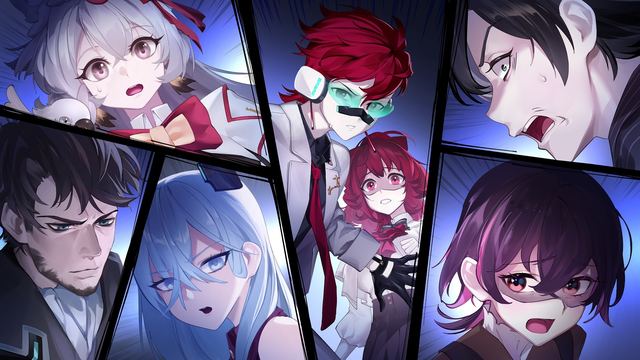
The scale is unusual for an indie release. The launch notes count more than 10,000 lines of Japanese voice acting against a script of more than 500,000 characters, and the cast includes individual credits per character on the trailer's patient-file cards.
Two practical consequences:
The performances matter to the design. Scenes are timed to voice, and the story-animation sequences were patched to let players control subtitle advance so text could not run ahead of the audio. If you play muted, you will notice the pacing is built for someone listening.
Voice variation was expanded twice. The September 2026 demo update added "more vocal variations for certain characters", and the launch build added further lines. If you played the demo early, the cast is more expressive in the current build.
Subtitles and text
Subtitles are a listed Steam feature, not an afterthought. In practice this means:
- Subtitle display is toggleable, so you can watch fully voiced scenes without text if you read Japanese.
- Story animations pause for subtitle advance, so a fast reader cannot outrun a scene.
- The text box supports AUTO, SKIP and a LOG for scrolling back through dialogue — all three were added during Steam Next Fest after players asked for them.
The log is the one you will use most. Thirteen characters with unusual names is precisely the situation where you want to scroll back two lines and check who said what.
Playing in a second language
If English is not your first language, the useful question is whether the translation quality holds. Two data points from the developers' own patch notes:
The November 2025 demo update revised all English and Japanese text with professional editing. The January 2026 update then rewrote the English localisation entirely with native speakers, citing dialogue flow, character tone and narrative clarity as the targets. That is two separate passes on the English script before launch, which is more than most indie visual novels get in their lifetime.
The Chinese and Korean localisations were covered by the September 2026 "multi-language text improvements" pass, described as an optimisation and adjustment round across all language texts. The developers also ran a Chinese-language bug thread on the Steam hub during launch week, which suggests that community is large enough to warrant its own support channel.
Audio settings
The store lists Stereo Sound and Custom Volume Controls, which means separate sliders rather than a single master. For a game with continuous music and a voice track, that is the difference between "turn it down" and "turn the music down but keep the voices audible".
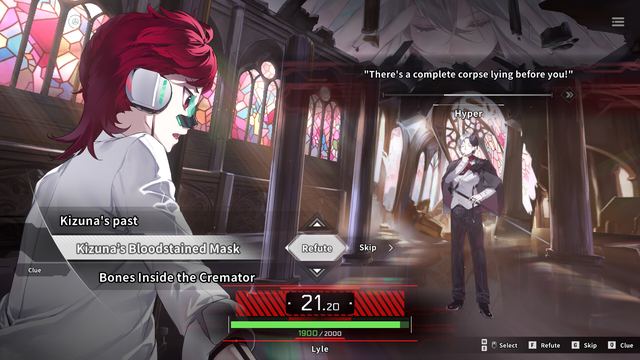
If you stream, the gore display and the volume mix are the two settings worth touching before your first chapter. The mix matters because the debate timer creates tension through sound, and a muted stream loses it.
The audio hardware question
Nothing here requires more than stereo. There is no surround mix, no spatial audio, no binaural mode. Headphones help with the quieter investigation scenes — the sound design leans on room tone — but a laptop speaker will do.
Where to go next
If you are choosing a language because of accessibility rather than preference, settings and accessibility covers subtitle sizing, colour alternatives and the difficulty options. If you want to know how much reading the game actually contains, chapters and story structure puts numbers on it.
For the practical question of whether the Japanese-only dub is a problem: it is not, provided you are comfortable reading subtitles for twenty hours. The game was written and performed with that assumption.
Language support and the full-audio marking are from the Steam store page; voice-line counts and localisation revisions are from the official announcements of September 2025 through September 2026. Checked 6 November 2026.
How much of the game is actually voiced
"Fully voiced in Japanese" is a bigger claim than it sounds on a 500,000-character script. In practice, the voice track covers dialogue scenes, story animations and the trial confrontations — the parts where performance carries meaning. Narration, menu text, clue descriptions and the patient-file cards are text.
That split matters for how you play. If you read Japanese, leaving subtitles off gives you a cleaner frame during cutscenes. If you do not, the subtitles are the game, and the Japanese track is tone rather than information — which is still worth having, because the debate timer makes you feel the pressure through the performance.