Five chapters, one trial each
Five chapters. Each one runs the same three beats: a murder inside the Selection, an investigation that the suspects' disorders corrupt, and a trial where you argue the case. The developers put a full playthrough at about 20 hours.
Psycho-Sleuth is five chapters long. That number comes from the developers directly — their streaming guidelines state it as a fact while explaining what you are allowed to broadcast — and it is the single most useful structural number published about the game, because it tells you how the twenty-hour estimate is divided. Roughly four hours per chapter.
What this page will not do is tell you what happens in them. The chapter structure is public and safe to describe; the contents are the game.
The repeating unit
Every chapter runs the same three beats, in the same order:
| Beat | What you do | How long it feels |
|---|---|---|
| The murder | Watch the killing, or arrive just after it | Short — usually the chapter's cold open |
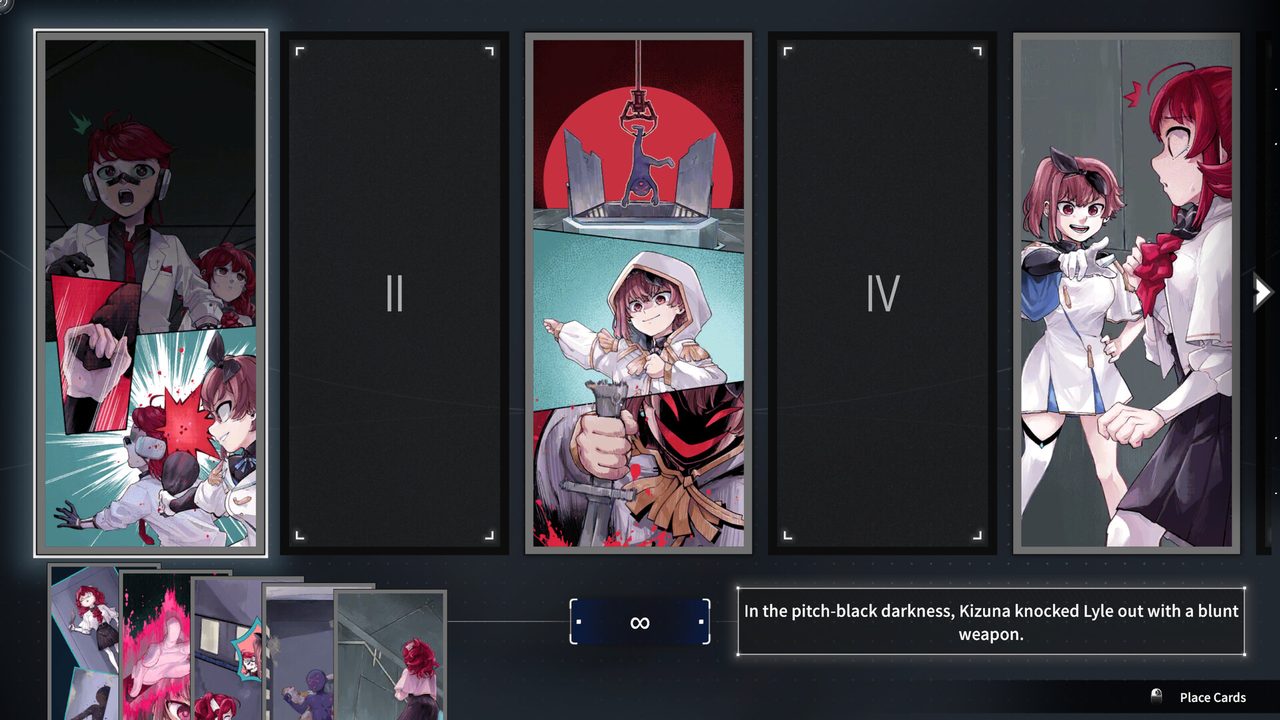
| The investigation | Walk the scene, talk to suspects, collect clues into a list | The bulk of the chapter |
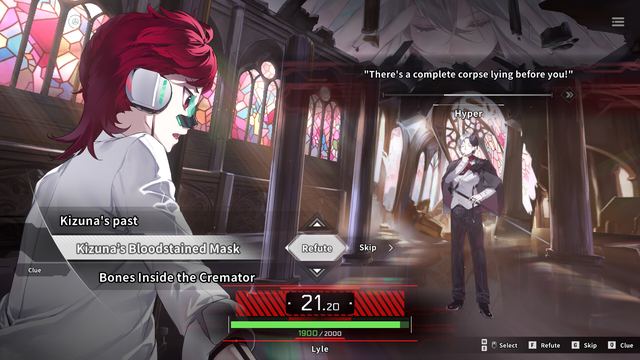
| The trial | Argue the case in Debate Mode, statement by statement | The chapter's climax, 30–60 minutes |
That loop is stated plainly on the store page — a murder, an investigation, a debate — and the game does not deviate from it. What changes between chapters is the disorder in the room, and therefore what counts as evidence.
The five chapters, described without spoilers
Chapter 1 — the opening case. This is the chapter the demo covers, and the one that has been rewritten the most. A body, a room, a first argument. It functions as a tutorial without labelling itself as one: the first trial teaches you the debate keys by putting you in a fight you can lose. If you played the 2025 demo, this chapter is not the version you remember; the launch build adds clues to cutscenes, changes some pacing, and adds voice lines.
Chapter 2 — the second round. The developers' own guidance to returning demo players is to jump straight to the Trial section of Chapter 2, which tells you two things: the chapter has a clearly marked trial, and the opening of the chapter is close enough to the demo's material that they expect people to skip it. A limited-time side story released in January 2026 required having met the core characters at the start of this chapter, which dates that cast introduction to early Chapter 2.
Chapter 3 — the middle. Nothing specific has been published about Chapter 3 beyond its existence. The developers' 2025 development log, written when the script was still being finished, mentions pushing hard on Chapter 4, which implies Chapter 3 was already drafted at that point.
Chapter 4 — the one they asked streamers to hide. The streaming guidelines single out Chapters 4 and 5 as the ones whose VODs should be set private or unlisted until 13 November 2026. That is as clear a signal as the studio can give without spoiling anything: the last two chapters are where the answers live.
Chapter 5 — the close. The final chapter, and the one that carries the ending. The store lists "Multiple Endings" as a tag, so the campaign does branch, but the shape of that branching has not been documented by the developers and this site does not map it.
Pacing, in numbers
| Measure | Published figure |
|---|---|
| Chapters | 5 |
| Full playthrough | about 20 hours |
| Average per chapter | about 4 hours |
| CGs in the game | 40 |
| Main characters with Live2D rigs | 13 |
| Original music tracks in-game | 50+ |
| Script length | 500,000+ characters |
| Japanese voice lines | 10,000+ |
Twenty hours across five chapters is a long chapter by visual novel standards — most games in the genre run 60 to 90 minutes per chapter. The difference is the investigation layer: reading is fast, walking a crime scene and cross-referencing a clue list is not. If you are a fast reader, expect the reading sections to compress and the investigation sections not to.
Why the chapters are built this way
The structure is doing something specific. Because every chapter ends in a trial, every chapter has a hard reset: a new body, a new disorder, a new set of suspects to re-learn. That is a good shape for a mystery, because it lets the game hand you a fresh puzzle without pretending the previous one did not happen, and it lets the cast rotate who is under suspicion.
It is also a demanding shape. Five trials means five argument systems to re-teach, and the risk of a chapter that feels like filler is real. The launch-week complaints about pacing are mostly about Chapter 1, which the developers have already revised once; whether the middle chapters hold up is the thing reviews will settle over the next few weeks.
How to read this site while playing
The rule here is simple: the Chapter 1 walkthrough covers only what the demo already made public. Everything past that is described in structure only — how many trials, how the loop works, what the systems do — never who did it or why.
If you want a reading order rather than a chapter order, the walkthrough hub lays out three routes: one for a new player, one for a returning demo player, and one for someone who just wants to know whether to buy.
The chapter count, playtime estimate and asset figures were taken from the official streaming guidelines and the September 2026 release-date announcement, and the chapter-2 detail from the same guidelines' advice to demo players. Checked 6 November 2026.