What Psycho-Sleuth actually is
Psycho-Sleuth is a mystery visual novel from the Taiwanese studio PHOSEPO, published by Thermite Games and Smilegate, released on Steam on 4 November 2026. You investigate murders committed inside a cult's trial, where thirteen suspects each carry a contagious cognitive disorder that warps the crime scene.
Psycho-Sleuth is a mystery visual novel about testimony that cannot be trusted, because the people giving it are not perceiving the same room you are. It was released on Steam on 4 November 2026, it costs $17.99 during the launch window, and it takes about twenty hours to finish. That is the whole answer at the top; everything below is the detail behind those three numbers.
What kind of game it is
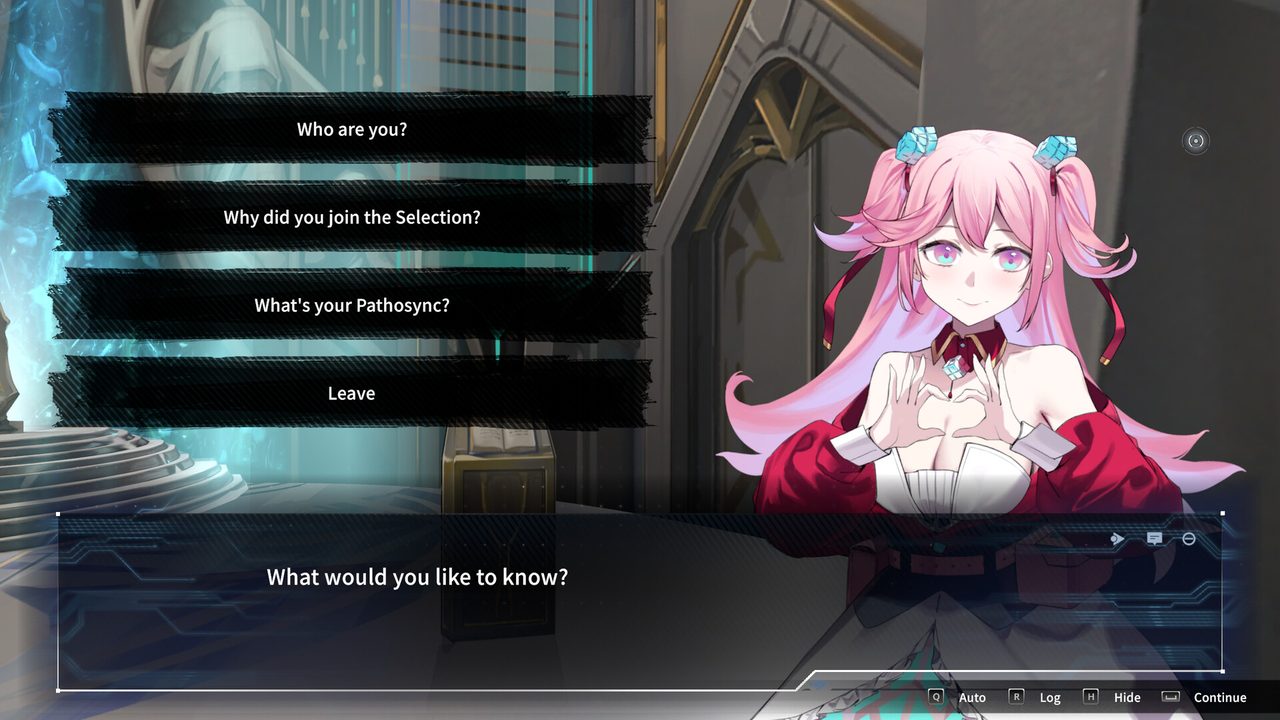
The store files it under Adventure and Indie, with tags that read like a genre checklist: Visual Novel, Mystery, Detective, Investigation, Puzzle, Story Rich, Dark, Psychological Horror. In practice it is a reading game with two interactive layers: an investigation layer where you examine a scene and collect clues, and an argument layer where you use those clues against a person who is lying to you, sometimes without knowing it.
The developer is PHOSEPO, a small studio in Taiwan. Publishing is split between Thermite Games and Smilegate, and the game also appears on Smilegate's STOVE platform. The scale is not small: the studio's own launch notes count 40 CGs, dozens of 3D backgrounds, dozens of After Effects and hand-drawn animations, Live2D rigs for all thirteen main characters, more than 50 original music tracks, a script over 500,000 characters, and more than 10,000 lines of Japanese voice acting.
The loop, in three beats
A murder happens. The Selection is a contest run by a cult called Li, and its rule is that whoever kills without being caught ascends. So each chapter begins with a body.
You investigate. This is where the game differs from a normal detective story. Every suspect carries a cognitive disorder, and the disorder is contagious — it spreads to the people around them and distorts what the room appears to contain. A character with spatial neglect does not see the left side of anything. A character with prosopagnosia sees faces as blanks. The scene you are standing in has been edited by someone's brain, and your first job is working out which parts of it are real.
You argue. Debate Mode runs the confrontation. Statements come at you one at a time, and you either accept them or strike them down by producing the correct clue. A timer runs while you decide.
Then the chapter ends, someone is punished in a way shaped by their own disorder, and the next round begins.
The tags, translated
Store tags are marketing copy, but they do predict what you will spend your evening doing. Here is what each one actually means for this game.
| Tag | What it means here |
|---|---|
| Visual Novel | Long reading stretches, boxed dialogue, character portraits, choices at set points |
| Investigation | Point-and-examine scenes with a clue list you build as you go |
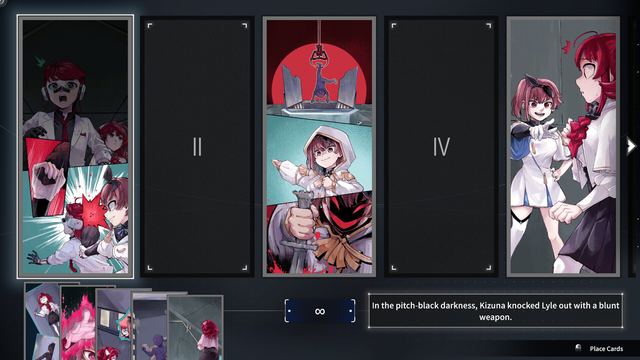
| Puzzle / Logic | The clue-to-statement matching in Debate Mode, plus comic-panel reconstruction |
| Mystery / Detective | A closed circle of thirteen suspects and one killing per chapter |
| Psychological Horror | Not jump scares: the horror is that perception itself is unreliable |
| Dark Humor | Present, mostly in the punishments and in how petty the Afflicted are about dying |
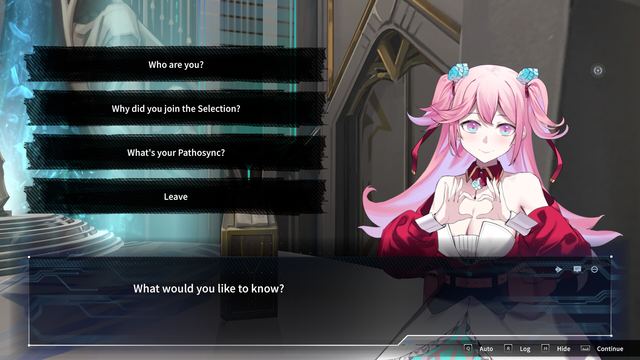
| Choices Matter | Dialogue choices change what you learn and how scenes play out |
| Multiple Endings | Listed on the store; the game does branch, and this site does not map the branches |
| Full controller support | Yes on desktop, with caveats covered in the Deck and controller file |
Two tags on that list are worth flagging because they set expectations badly. "Puzzle" does not mean escape-room logic — there is no inventory combination and no physics. And "Multiple Endings" does not mean a branching tree the size of a visual novel epic; it means the game tracks how you argued and what you chose.
How the demo fits
A free demo has been on Steam since 25 September 2025, and it is still up after launch. It covers roughly two hours — the opening case and the first trial — and it was rebuilt for release rather than abandoned, with extra cutscene clues, retimed debates and new voice lines.
The demo is not a slice of the finished game in the technical sense. Chapter 1 was substantially rewritten between the demo build and launch, so what you played in 2025 is not exactly what chapter one is now. The developers' own advice to returning demo players is to skip ahead to the Trial section of Chapter 2. The demo file has the version history and the save question.
What it is not
It is not an action game, and the "combat" language in the patch notes refers to the debate system, not to fighting. It does not have a morality meter that grades you, and it does not punish you with a game over for picking the wrong dialogue line in a conversation — the pressure is concentrated in the debates.
It is also not a game you can play in twenty-minute bursts on a commute without losing the thread. Thirteen suspects, several of whom are lying for reasons unrelated to the murder, is a lot of names to hold. If that sounds like the appeal, you are the audience. If it sounds like homework, the verdict page is honest about it.
Everything above was checked against the Steam store page, the official launch announcement and the 2025 announcement archive on 6 November 2026.