Pathosync and the afflicted powers
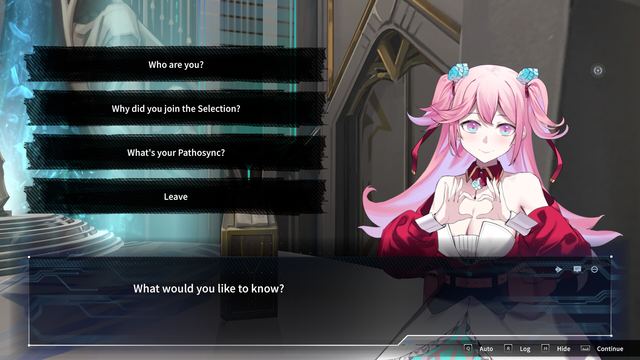
Pathosync is the system that turns a cognitive disorder into a power. The store page names OCD (absolute truth), spatial neglect (the left side of reality erased), prosopagnosia (faces blurred) and alien limb syndrome as examples of what reshapes a scene.
Pathosync is the word Psycho-Sleuth uses for the thing that happens when a cognitive disorder stops being a symptom and becomes a weapon. The store page describes it as a system where each of the thirteen Afflicted carries "a distinct disorder and a unique Afflicted Power". The developers' own explanation, given to fans in the launch-week creation event, is a two-step question: what disorder would this person have, and what kind of power would that disorder become once it awakened.
That is the whole design in one sentence. The disorder is not a debuff on the character. It is the mechanism by which they alter the world around them — including the crime scene you are standing in.
What the store page actually says
Four disorders are named in the official store text, and each is described by its effect rather than by its clinical name:
| Disorder as named | The official description | What it does to a scene |
|---|---|---|
| OCD | "forces absolute truth where no one can lie" | Statements from this character are true — which makes them useless as suspects and dangerous as witnesses |
| Spatial neglect | "erases evidence from the left side of reality" | Objects on the left of a room do not exist for them, and the scene is drawn that way |
| Prosopagnosia | "blurs every face into anonymity" | They cannot identify anyone by face; their testimony describes a room of strangers |
| Alien limb syndrome | Raised as a question about a corpse with severed limbs | A body that looks like a murder may be a symptom, not a crime |
The store text raises alien limb syndrome as an open question — "that corpse with severed limbs, was it murder? Or did they fall victim to their own Alien Limb Syndrome?" — which is exactly the kind of question the game wants you to sit with. It is also the clearest statement of the design principle: the disorder can be the murder weapon, the alibi, or the corpse itself.
Disorder versus power
The distinction matters when you are reading a suspect.
A disorder is what the character cannot do. It is a hole in their perception, and the hole is contagious: the store states that the disorders spread their warped perceptions to others, which is why a room can look wrong even when the person standing in it is telling the truth.
An Afflicted Power — the game's term — is what the disorder becomes when it is turned outward. The fan-event brief describes this as awakening: the disorder becomes a Pathosync ability that affects other people rather than only its owner.
So a character with spatial neglect lives in a world missing its left half. Once that becomes a power, the people around them start missing their left halves too. That is the horror engine of the game, and it is why evidence has to be reconstructed rather than simply collected: you are not looking at a crime scene, you are looking at someone's perception of one.
How the game presents it
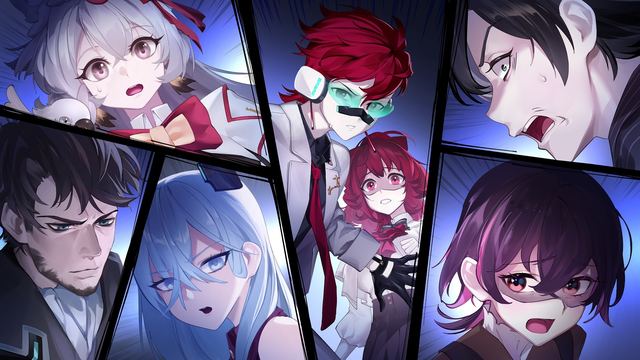
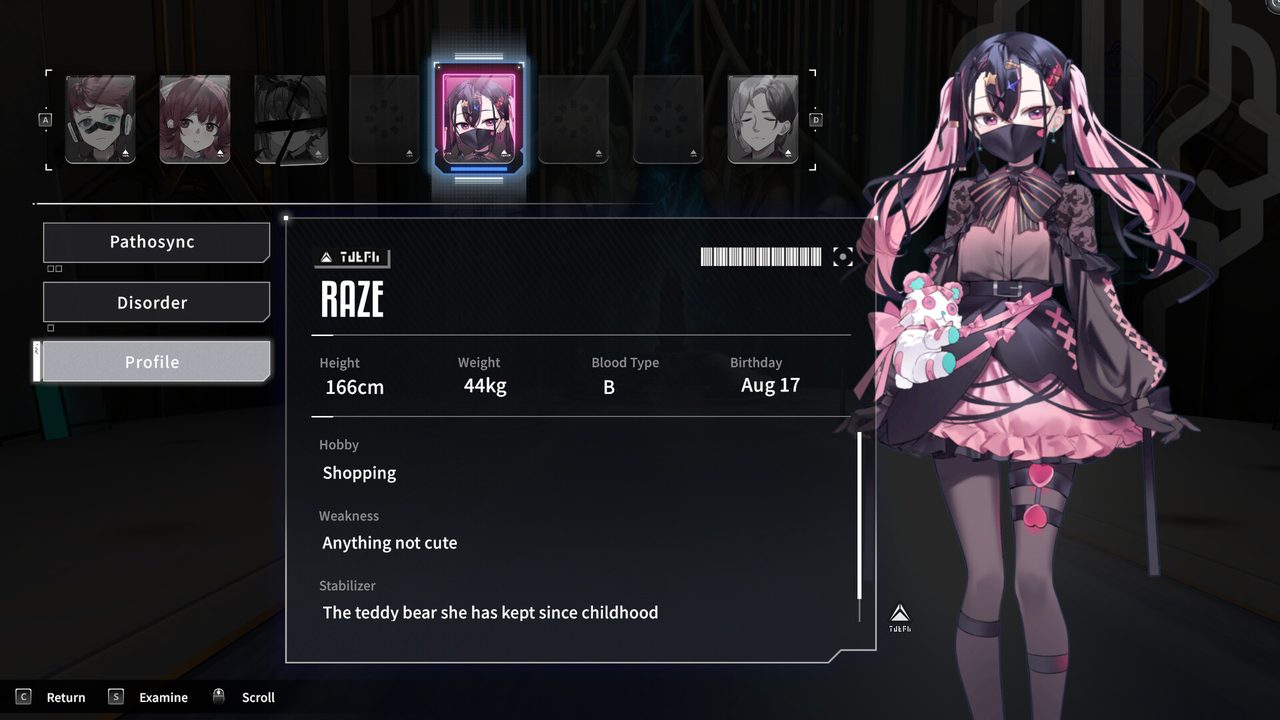
The interface does the teaching. Screenshots show a Pathosync Disorder Profile panel opened over the scene — a dossier card with the character's condition laid out — and the trailer introduces characters on Divine Seeds patient-file cards, styled as a Logic Church broadcast, with a number, a name and a condition.
That framing is worth noticing because it tells you what kind of document you are reading. The game is not asking you to diagnose anyone; it is handing you a file that the cult has already written, and letting you decide whether the file is accurate. A cult that ranks people by their illness has an interest in how that illness is described.
Why it works as a puzzle
Most detective games make evidence reliable and testimony unreliable. Psycho-Sleuth makes both unreliable, and then gives you a rulebook for the unreliability. Once you know a suspect cannot see the left side of a room, the missing knife on the left of the table stops being a mystery and becomes a fact about the witness.
That is a genuinely different shape of deduction. Instead of asking "who is lying", you ask "which of these people is incapable of seeing the thing I can see" — and then whether the thing you can see is even there.
What is not published
The developers have not published a full list pairing each of the thirteen characters with their disorder, and the in-game profile cards are the place that information lives. This site does not guess at the pairs; the cast file lists the names that have been made public and explains how the game introduces them.
There is also no published tier list, and this site will not build one. Nothing in Psycho-Sleuth has a damage number. The powers are narrative devices with puzzle consequences, not a stat system, and ranking them would be inventing a spreadsheet the game does not have.
Where to go next
If the disorders are what is confusing you mid-argument, Debate Mode explains how a clue is matched to a statement, and why a true statement from an OCD character is the most dangerous thing in the room.
If you want the fiction around the system rather than the mechanics, the Logic Church file covers why thirteen people agreed to be in this building in the first place.
Disorder names and descriptions are quoted from the Steam store page; the Pathosync/awakening framing is from the official fan-creation announcement of 5 November 2026; the profile-card presentation is from the official screenshots and trailer. Checked 6 November 2026.