About this guide
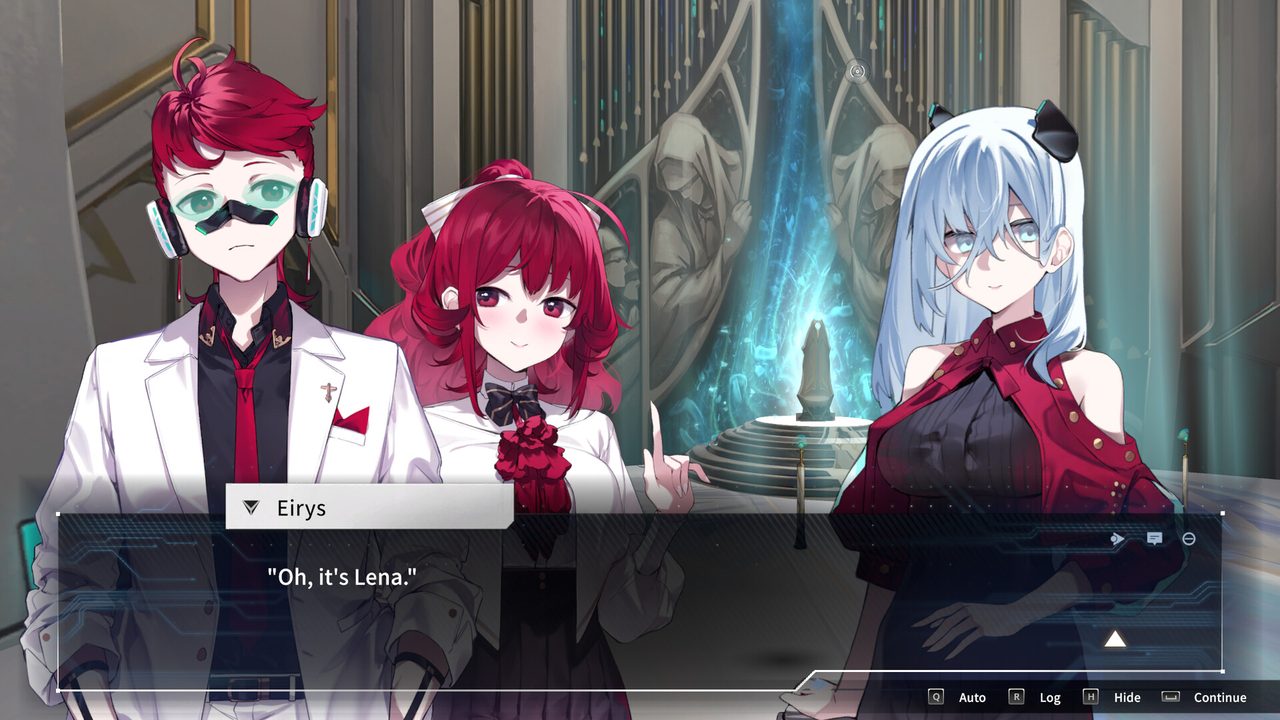
This is an unofficial guide site for Psycho-Sleuth. It is not run by PHOSEPO, Thermite Games or Smilegate, and nothing here is endorsed by them. The game's imagery is official Steam store and announcement material, used for reference under the assumption that a fan site covering a game may show the game.
What the site is for
One question, answered once, per page. A player searching for the price should not have to read a plot summary to find it; a player stuck on the first debate should not have to read a review to find the workaround. The pages are separated along those lines, and the guides index is the map.
The site covers a game that launched two days ago, which makes accuracy a moving target. Prices change when a discount ends, patches fix what was broken on day one, and review counts move hourly. Every page carries the date it was checked, and that date is the honest boundary of what the page knows.
Where the numbers come from
Every figure on this site traces to one of four kinds of source, in descending order of authority:
| Source | What it is used for |
|---|---|
| Steam store page (app 3432860) | Price, release date, features, languages, specs, achievement names, review counts |
| Official Steam announcements | Chapters, playtime, asset counts, patch history, streaming rules, event details |
| Steam's public achievement API | Global unlock percentages |
| Player reports on the Steam hub | Bug reports, controller problems, launch-week workarounds |
Where a fact comes from a player rather than the studio, the page says so in the sentence, not in a footnote. Where the studio has not published something — the pairing of characters to disorders, for instance — the page says it is not published and stops there. It does not guess and present the guess in the same typeface as the facts.
What this site will not publish
Story solutions. No culprit, no ending, no breakdown of Chapters 3 to 5. The game's value is a reveal, and a guide that front-loads it is not a guide.
Invented statistics. No damage numbers, no tier lists, no drop rates. Psycho-Sleuth does not expose those systems, and a spreadsheet of made-up values is worse than no spreadsheet.
Unverified character data. The cast page lists the names the developers published and says plainly that the full character-to-disorder mapping is not public.
Leaked material. Nothing from datamining, nothing from a build that is not on sale.
Corrections
If something here is wrong, the correction is welcome and will be made quickly — the site is two days old and the game is younger than the site. The contact page explains what to send.
The most useful correction includes the page, the sentence, and a source: a store page quote, an announcement link, or a screenshot of the in-game text. Corrections without a source still get read, but they take longer to verify.
On spoilers, and why the site is shaped this way
A mystery game is a one-time experience. Once you know who did it, the puzzle is gone permanently, and no amount of good writing gets it back. That is why this site publishes structure instead of solutions: five chapters, this many trials, this is what a debate is, this is what a disorder does to a room — and then stops.
The Chapter 1 walkthrough exists because the demo already made that chapter public. Everything past it is described only in terms of how it is built.
The site's own limits
It is written in English only. It covers Steam only — the game is also on Smilegate's STOVE storefront, and that version's pricing and patches are not tracked here.
It is updated manually, not by a scraper, which means a patch released this afternoon may not be reflected here tonight. The checked date at the bottom of each page is the truth about that.
Credits
Game imagery: official Steam store screenshots, official Steam announcement artwork and frames from the official trailers, all © PHOSEPO and its publishers. Text is written for this site and is not copied from the store page or from reviews.
Psycho-Sleuth is a trademark of its respective owners. This site claims no affiliation with them.
Page-level sourcing is stated at the bottom of each guide. This page was checked on 6 November 2026.
How this site decides what to publish
Three tests, applied to every page before it goes up.
Is the question real? A page exists because a player would type it, not because a keyword list suggested it. Price, chapter count, Deck support, demo saves, softlocks — these are questions people ask on day one, and the answer is worth a page.
Can the answer be sourced? If a number cannot be traced to the store page, an official announcement or Steam's own API, it does not go in the body. If a fact exists but the source is a single player post, it is labelled as a player report in the sentence.
Does the answer spoil anything? For a mystery game, this is the test that shapes the whole site. Structure is publishable; solutions are not.
How the pages stay honest
Every guide ends with the same two things: a sentence naming where its facts came from, and a checked date. When a page is updated, both change together. A page checked in November saying "94% positive from 95 reviews" is a true statement about November; it will be false later, which is why the date is attached rather than hidden.
The site does not claim to be complete. Twenty-six guides cover what a player needs in the first fortnight — systems, prices, specs, bugs. It does not cover every achievement condition, every dialogue branch or every ending, because those either require solutions or require inventing them.
Why the pages are written this way
The tone is deliberate: direct, sourced, and free of the hedging that makes game guides unreadable. Where the game is good, the page says so. Where the launch build is rough, the page says that too — the softlock is documented, the Deck rating is quoted as Unsupported, and the reviews page does not pretend 95 reviews is a consensus.
That is not neutrality for its own sake. A guide that only praises a game is marketing, and a guide that only criticises it is a rant. The useful thing is the specific fact in the specific place.