Psycho-Sleuth and Danganronpa
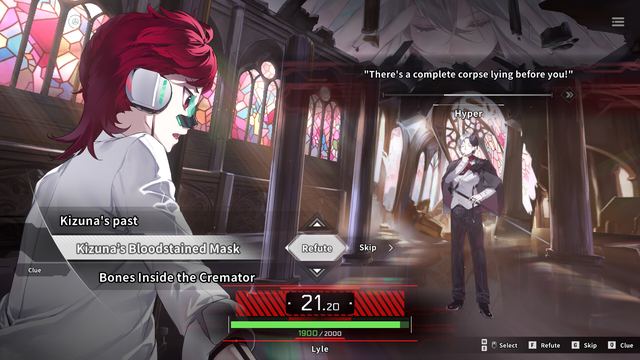
Both are class-trial mysteries, but Psycho-Sleuth puts the twist in perception rather than in the culprit: the evidence itself is unreliable because a suspect's disorder is in the room. Danganronpa leans harder on mini-games and spectacle.
Both games put you in a room with a group of people, kill one of them, and make you argue about it. After that the resemblance thins out fast, and the differences are the interesting part — not because one is better, but because they are trying to do different things with the same furniture.
This page compares mechanics, not sales figures, and it does not quote numbers for Danganronpa that this site has not verified. Where a Danganronpa detail is described, it is the broad, widely known shape of the series.
Side by side
| Element | Psycho-Sleuth | Danganronpa |
|---|---|---|
| Framing | A cult's ritual contest, thirteen Afflicted, one murder per round | A killing game run by a mascot, students forced to kill to escape |
| Cast size | 13 named Afflicted | A class of students per game, similar order of magnitude |
| Trial format | Debate Mode: accept or refute each statement with a clue | Class Trial: nonstop debate, contradictions shot with evidence |
| Evidence handling | Clues collected in investigation, matched against statements | Truth Bullets loaded from evidence, fired at contradictions |
| The twist mechanic | Suspects' cognitive disorders corrupt the scene itself | Mini-games, rebuttals, and increasingly absurd trial gimmicks |
| Punishment scenes | A punishment shaped by the culprit's own disorder | An execution themed to the culprit's talent or sin |
| Tone | Monochrome, gothic, restrained; horror from perception | Neon, theatrical, comic; horror from spectacle |
| Action elements | None — reading, investigating, arguing | Aiming, rhythm, and other trial mini-games |
| Length per game | about 20 hours, five chapters | Full games in the series run considerably longer |
| Romance / social systems | None listed | Free Time events and relationship building |
Where Psycho-Sleuth is doing something different
The evidence is the puzzle, not the murder. In a class-trial game, you find the truth and then prove it. In Psycho-Sleuth, the thing you are standing in has already been edited by someone's brain — a suspect genuinely cannot see the left half of the room — so the first deduction is about which parts of the scene exist at all.
That changes the shape of the failure state. In Danganronpa, a wrong answer usually means you misread a clue. In Psycho-Sleuth, a wrong answer can mean you trusted a witness who was physically incapable of seeing the thing you are asking about.
The debates are the whole interaction. There is no shooting, no rhythm section, no hangman's-gun equivalent. Debate Mode is statement-by-statement judgement with a timer, and the entire skill ceiling lives there.
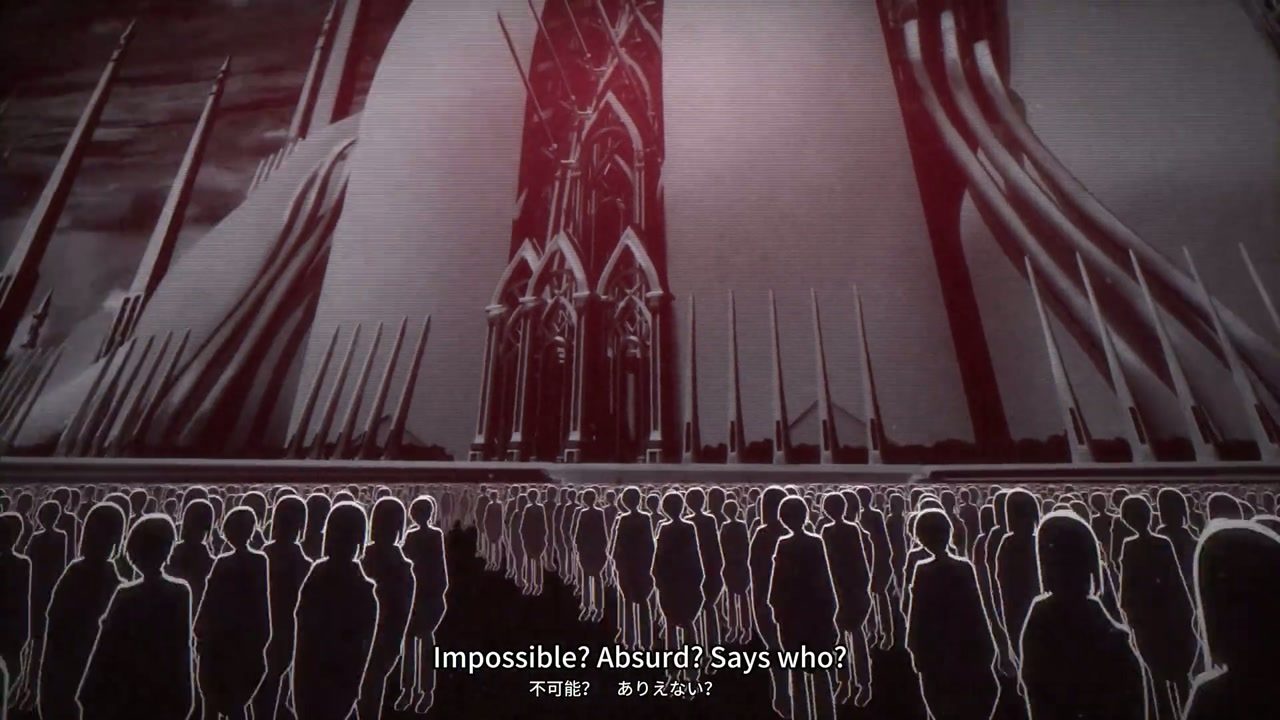
The horror is quieter. A cult that ranks people by diagnosis and a set of stained-glass rooms is a different register from a bear and a neon school. Neither is scarier; they are aimed at different fears.
Where Danganronpa still does it better
Being fair to the comparison:
Trial variety. The series reinvents its trial mechanics every game — new mini-games, new rebuttal types, new ways to lie. Psycho-Sleuth has one argument system, refined but not reinvented, across five chapters. Twenty hours of one mechanic is a long time.
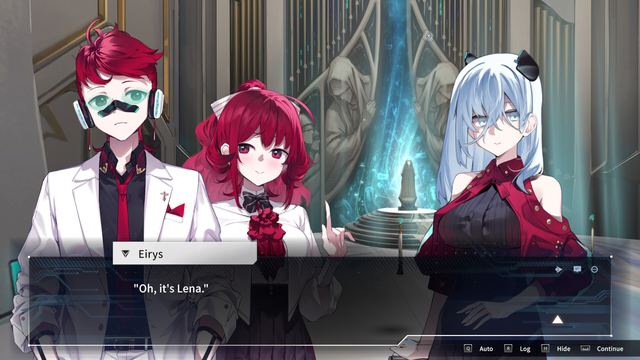
Cast chemistry. Free Time events give Danganronpa's students lives outside the trial. Psycho-Sleuth's thirteen are documented through patient files rather than befriended, which is thematically right but emotionally cooler.
Spectacle. The executions are a signature for a reason. Psycho-Sleuth's punishments are conceptually sharper — shaped by the culprit's own disorder — but they are staged as visual novel scenes rather than set pieces.
Where the audience splits
| You want… | Go to |
|---|---|
| A trial game with mini-games and momentum | Danganronpa |
| A mystery where perception is the puzzle | Psycho-Sleuth |
| A cast you can befriend between cases | Danganronpa |
| A short, dense, single-mechanic mystery | Psycho-Sleuth |
| Horror through theatrical excess | Danganronpa |
| Horror through unreliable narration | Psycho-Sleuth |
| Something to play on a Steam Deck | Danganronpa — Psycho-Sleuth is currently Unsupported |
Is Psycho-Sleuth a "Danganronpa-like"?
Structurally, yes: closed circle, one murder per chapter, a trial where you argue with evidence. That is a genre, not a copy, and the genre is old enough that neither game owns it.
Mechanically, no. The disorder system is not a reskin of Truth Bullets — it changes what counts as evidence, which is a deeper cut than a new mini-game would be. Whether that makes it better is a taste question; whether it makes it different is not.
What this page will not do
It will not tell you which game is better, because the two are not competing for the same evening. It will not quote review scores for Danganronpa from memory, and it will not pretend the series has a single representative entry — the games differ from each other as much as this one differs from them.
If you already know you like class trials and you want to know whether this one is worth $17.99, the verdict page is the honest version. If you want to know how the trial system works before you commit, debate mode is the mechanical detail.
Psycho-Sleuth details are from the Steam store page and the official announcements, checked 6 November 2026. Danganronpa is described at the level of widely known series mechanics only; no figures for that series are asserted here.